Custom mobile & web product development

Software built to launch.

Slipway turns ideas into polished mobile and web products—from planning and design through development, testing and launch.

  • iOS
  • Android
  • Web
  • Backend & infrastructure

What we build

Products, not deliverables.

We build the kinds of software that have to work on day one and keep working after launch. If your idea sits somewhere across these, it's the right conversation.

I

Apps & platforms

  • iOS & Android apps

    Native-feeling mobile products people keep on the home screen — built, tested and taken through App Store and Play review.

  • Web applications

    Products that work as well on a laptop as on a phone, and stay fast as they grow.

  • Member platforms

    Accounts, roles, permissions and gated content, with the admin tooling to actually run them.

II

Revenue & operations

  • Subscription products

    Plans, trials, upgrades and renewals that hold up under real billing — in-app purchases or web checkout.

  • Booking & scheduling

    Availability, reminders and payments shaped around how your business actually books work.

  • Admin dashboards

    The internal screens your team runs the business from, designed with the same care as the customer-facing app.

III

Intelligence & content

  • AI-enabled features

    Assistants, summarization and natural-language search — built in where they genuinely earn their place.

  • Video & content platforms

    Upload, playback and libraries, structured so people come back for the content.

  • Third-party integrations

    Payments, banking data, CRMs, messaging — the outside systems your product has to talk to reliably.

Process

Idea to launch, in five steps.

A clear path from idea to launch—so you know what is being built, and what it will cost, before development begins.

  1. 01

    Discover

    We start with the business, not a feature list — who it is for, what it has to do, and what makes launch a success.

  2. 02

    Scope

    Every screen and feature written down, what is in and what is explicitly out, with pricing agreed before anything is built.

  3. 03

    Build

    Development in visible increments. You see working software throughout, not silence followed by a reveal.

  4. 04

    Test

    Real devices, edge cases, payment and sign-in flows exercised properly — problems found before your users find them.

  5. 05

    Launch

    App Store and Play submission, release and monitoring set up, and a handover that leaves you owning it.

Featured work

Built and shipped, not just designed.

Slipway is a small studio. The clearest proof of how we work is a product our founder took all the way—design, engineering, infrastructure and store release included.

Independent productPersonal finance · iOS & Android

Penny

Penny helps people understand what they can safely spend once bills, paychecks, savings goals and upcoming obligations have been accounted for.

Penny is an independent product designed, built and launched end to end by Slipway's founder—not a client engagement. We show it because it is the most complete example of how we work: a real product with real infrastructure behind it, taken through store review and into people's hands.

  • Live on the Apple App Store
  • Android submitted to Google Play, awaiting review

What we built

  • 01Safe to Spend, the core calculation the product is built around
  • 02Bill and paycheck tracking
  • 03Savings goals
  • 04Bank connections and transaction syncing via Plaid
  • 05Ask Penny, an AI assistant for personal finance questions
  • 06Subscriptions and in-app purchases
  • 07Authentication, database and backend infrastructure
  • 08Push notifications and biometric security
  • 09Deployment, testing and App Store distribution

From the product
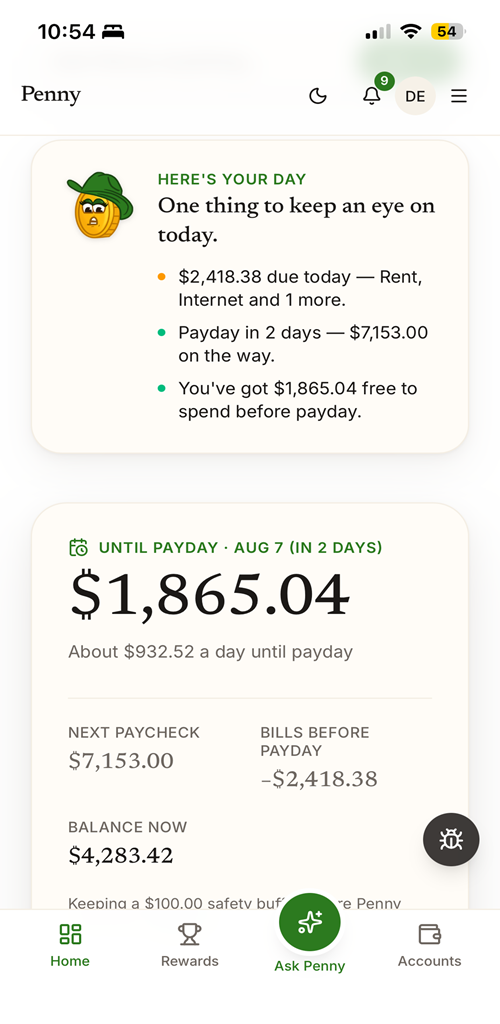
  • Penny’s home screen showing how much is free to spend before the next payday, with the next paycheck, bills due before then, and current balance broken out beneath it.
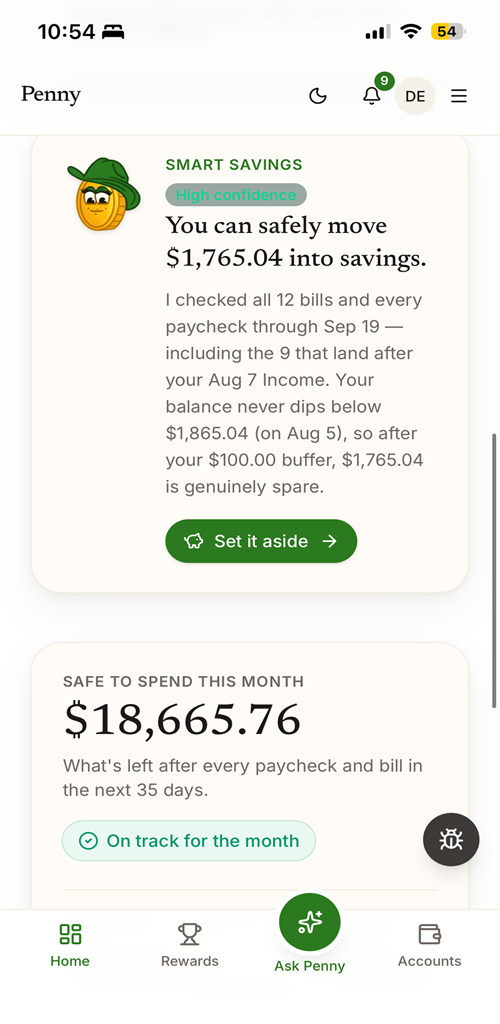
  • Penny’s Smart Savings card explaining how much can safely move into savings after checking every upcoming bill and paycheck, above a Safe to Spend total for the month.
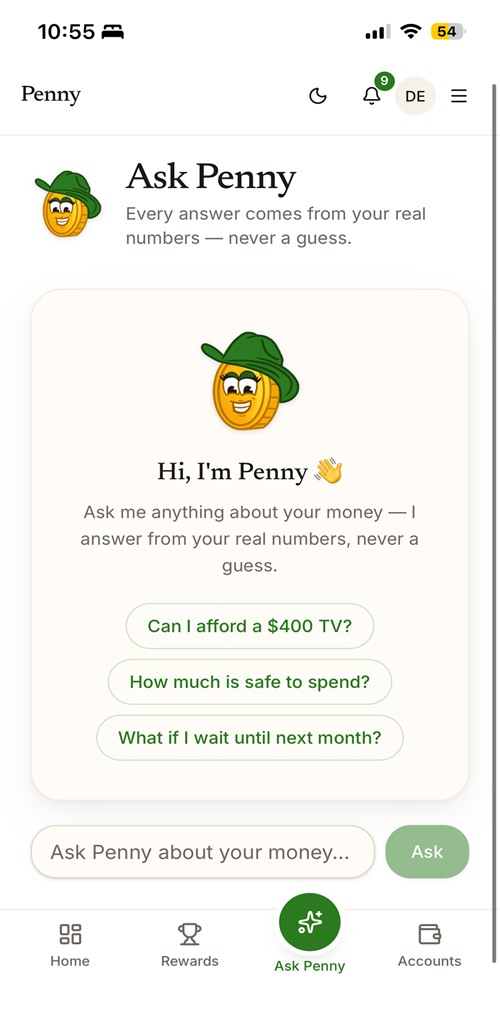
  • The Ask Penny assistant, with suggested questions such as “How much is safe to spend?” and a prompt field for asking about your own money.
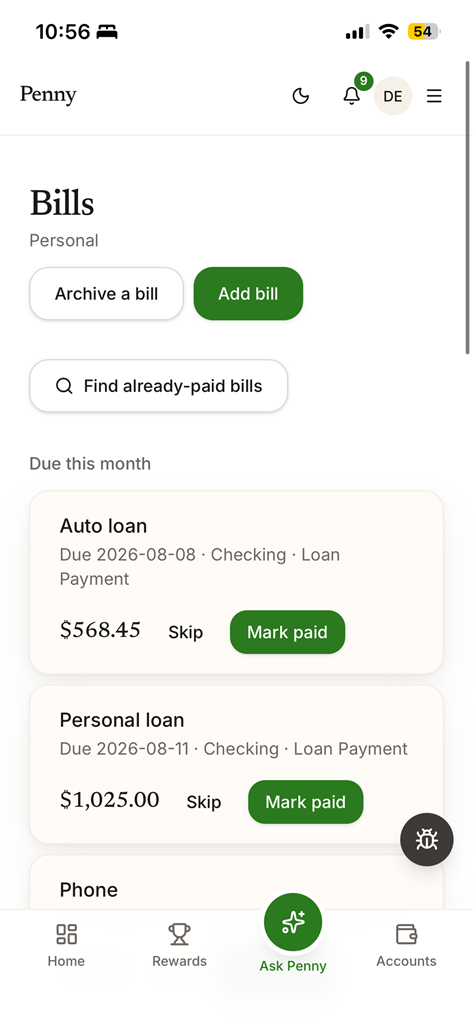
  • Penny’s Bills screen listing recurring payments due this month with their due dates, amounts, and controls to mark each one paid.
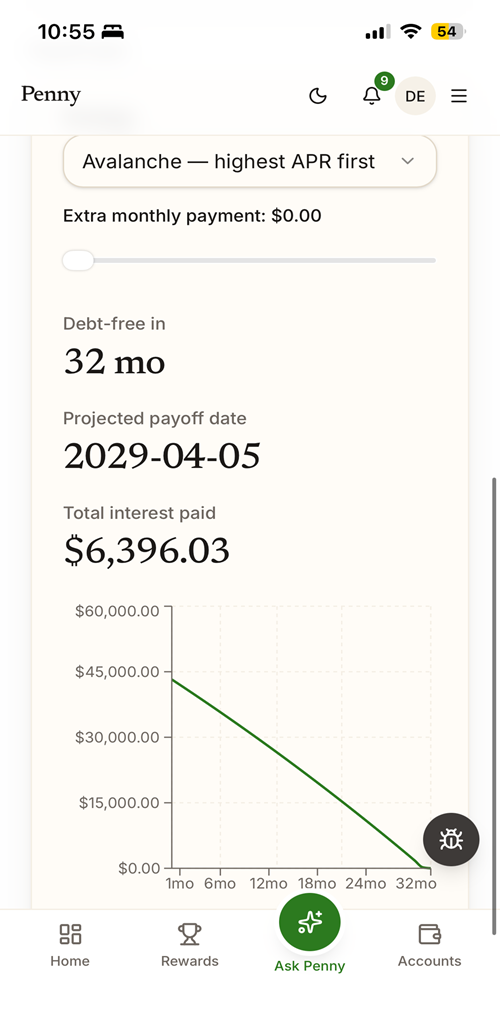
  • Penny’s debt payoff planner using an avalanche strategy, showing months to debt-free, a projected payoff date, total interest, and a balance-over-time chart.

Client case studies are published here as projects launch.

Yours could be first

Pricing

Projects typically start at $10,000.

That's a starting point, not a package. What a build actually costs depends on scope, the platforms it ships on, the systems it has to integrate with, and how complex the product is underneath.

Before development begins

You receive a written scope and the pricing that goes with it, agreed before any production code is written. How an engagement is structured varies with the project—what does not vary is that you see exactly what you are buying, and what it will cost, before you commit to it.

Get a scope and a price

What moves the number

Scope

How many screens and features, and how much of the product has to exist before it can launch.

Platforms

iOS, Android, web, or some combination. Each one you add is real additional work.

Integrations

Payments, banking data, calendars, CRMs. Outside systems are usually where the effort hides.

Complexity

Accounts, permissions, subscriptions, AI features and anything with real data behind it.

Why Slipway

A studio, deliberately small.

We keep our workload deliberately small. That is a choice, not a limitation—it is what makes everything below possible.

  1. 01

    Direct communication

    You talk to the person building your product. No account manager relaying messages, no game of telephone between you and the code.

  2. 02

    Clearly defined scope

    A written scope and clear pricing before development starts. "What are we actually building?" is never an open question mid-project.

  3. 03

    Product thinking, not just coding

    We push back on features that will not earn their keep, and raise the ones you have not thought of yet. You are hiring judgement, not just hands.

  4. 04

    Development through launch

    We do not hand over a zip file and wish you luck. Testing, store submission, release infrastructure and handover are part of the job.

  5. 05

    No unnecessary complexity

    The simplest thing that does what you need. Fewer moving parts means less to break, less to explain, and less to pay for later.

Start a project

Have an idea worth building?

Tell us what you have in mind. Even a rough idea is enough to start from—shaping it is part of the work.

  1. 01We read it and reply personally — not an autoresponder.
  2. 02A short call to understand the product and what launch has to look like.
  3. 03A written scope and clear pricing, before any development begins.

Platform